


In the first of a new series looking back at some of the most memorable cars to enter the British chauffeur market, TheChauffeur.com founder Paul Gibson recalls his experiences with the Chrysler 300C, its impact on the industry and why, more than two decades after its launch, he still owns one today. He writes…
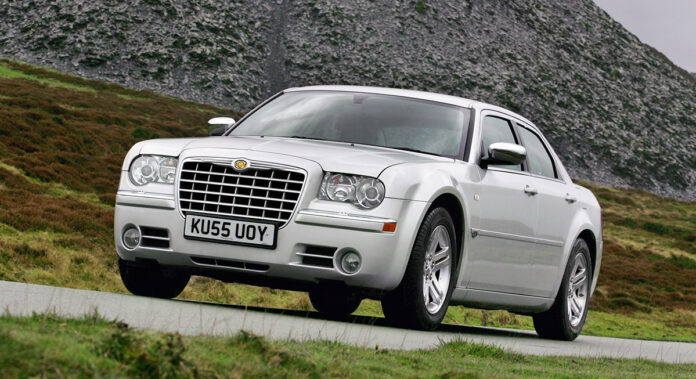
I REMEMBER driving through the streets of Eastbourne in 2005, feeling as though shopkeepers were locking their doors as I drove past. Behind the wheel of a large, silver, left-hand-drive American saloon with an enormous front grille, high waistline and narrow windows, I probably looked like someone who had just stepped out of a particularly dodgy gangster film.
People were staring at the car as I cruised past. Was it a Bentley? Was it a Rolls-Royce? Nobody seemed to know.
It was, of course, one of the very first examples of the Chrysler 300C to arrive in the UK, and little did I know at the time that, more than 20 years later, I would have one sitting on my own driveway as my daily drive.
When I launched The Chauffeur magazine in late 2003, I remember publishing the news the following year that Chrysler was bringing its new flagship saloon to Britain, with European production subsequently taking place in Austria. I knew then that this car would make some waves.
Chrysler had never been a particularly significant player in the British executive car market, let alone the chauffeur industry. However, the 300C was something entirely different, and I immediately felt the manufacturer had something special on its hands.
A lot of car for the money
It’s difficult to explain today just how much of an impact the 300C made when it first appeared on British roads.
At a time when executive saloons were becoming increasingly conservative in their styling, Chrysler had produced something that looked expensive, imposing and completely unlike anything else in its price bracket.
That high waistline, relatively shallow windows, enormous bonnet and almost oversized front grille gave it a road presence that was difficult to find outside the likes of Bentley and Rolls-Royce.
When the 300C arrived in Britain in late 2005, the range initially included the 3.5-litre V6 petrol and the enormous 5.7-litre HEMI V8. However, it was the arrival of the diesel in January 2006 that would prove particularly significant for the chauffeur industry.
It was a huge amount of car for the money.
With elements of Mercedes-Benz E-Class engineering underneath, the 300C offered generous amounts of rear legroom, a super-soft ride, plenty of standard equipment and a level of road presence that many considerably more expensive cars struggled to achieve.
Chrysler had managed to create a car that felt luxurious from behind the wheel without needing complicated suspension technology or endless driving modes. It was just a big, comfortable saloon that was at its best when cruising effortlessly along the road.
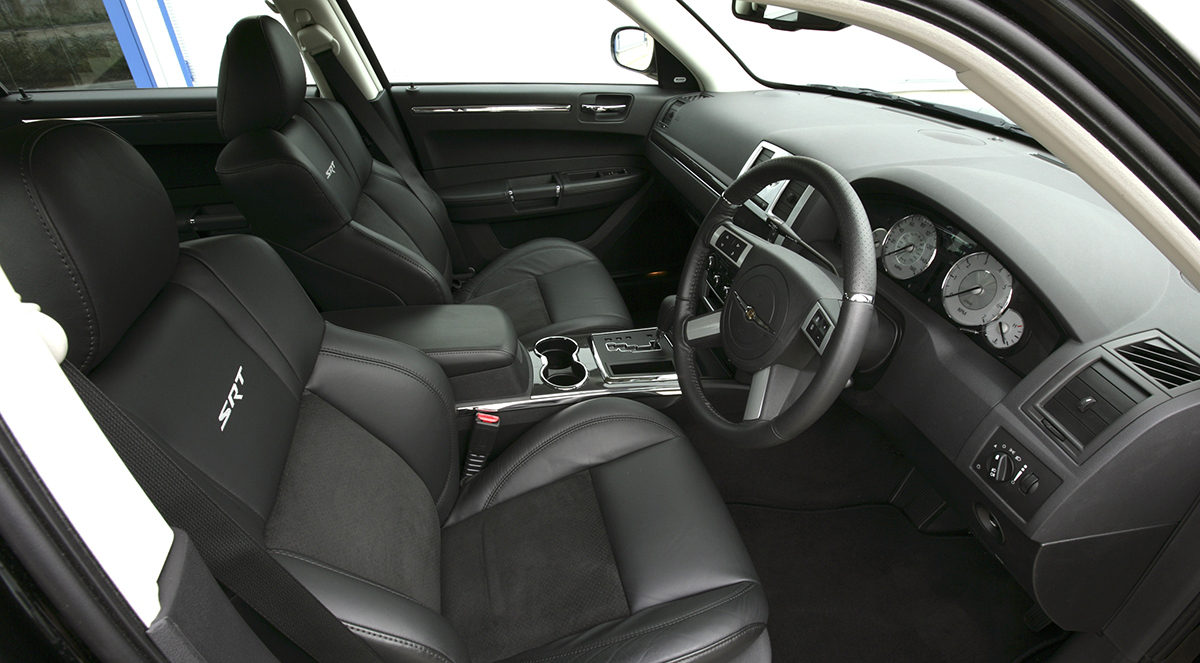
Admittedly, some of the interior plastics were questionable. There were areas of the cabin where you could clearly see how Chrysler had managed to keep the price down, but there was something about the overall package that made those shortcomings easier to forgive.
It had character, and plenty of it.
The 300C clearly struck a chord with British buyers. In December 2005, Chrysler announced that its entire UK allocation for the year had already sold out, despite the car having only recently arrived in showrooms.
The manufacturer was preparing to expand the range in 2006, with the Touring estate arriving in May and the high-performance SRT-8 saloon in April. The latter featured a 6.1-litre HEMI V8 producing 420hp, with Chrysler claiming a top speed of 170mph and a 0–62mph time of less than five seconds.
It was an ambitious period for Chrysler in Britain, and I remember wondering just how far the company could take the 300C. But for the chauffeur industry, the most significant development was still to come.
The diesel that changed everything

As much as I enjoyed driving the early petrol version, it was clear that Chrysler needed a diesel engine if it was going to make any meaningful inroads into the British chauffeur industry.
That came in January 2006 with the introduction of the 3.0-litre V6 CRD, sourced from Mercedes-Benz.
Priced at just £25,750 for the saloon, it offered a remarkable proposition for professional chauffeurs: a large, imposing executive car with a Mercedes diesel engine, a silky-smooth five-speed automatic gearbox and the potential to approach 40mpg on longer journeys. Suddenly, the 300C made commercial sense.
We published a series of road tests in The Chauffeur magazine, and gradually I started to notice more interest from operators.
It wasn’t necessarily going to tempt chauffeurs away from their S-Class Mercedes, particularly those working at the very top end of the industry, but it presented a genuine alternative to the E-Class, Jaguar XJ and even the increasingly popular Skoda Superb.
We started to see private hire companies investing in the 300C, and from what I saw, many did rather well with them. Their customers were experiencing a car that looked and felt special, without the operator having to charge significantly more for the journey.
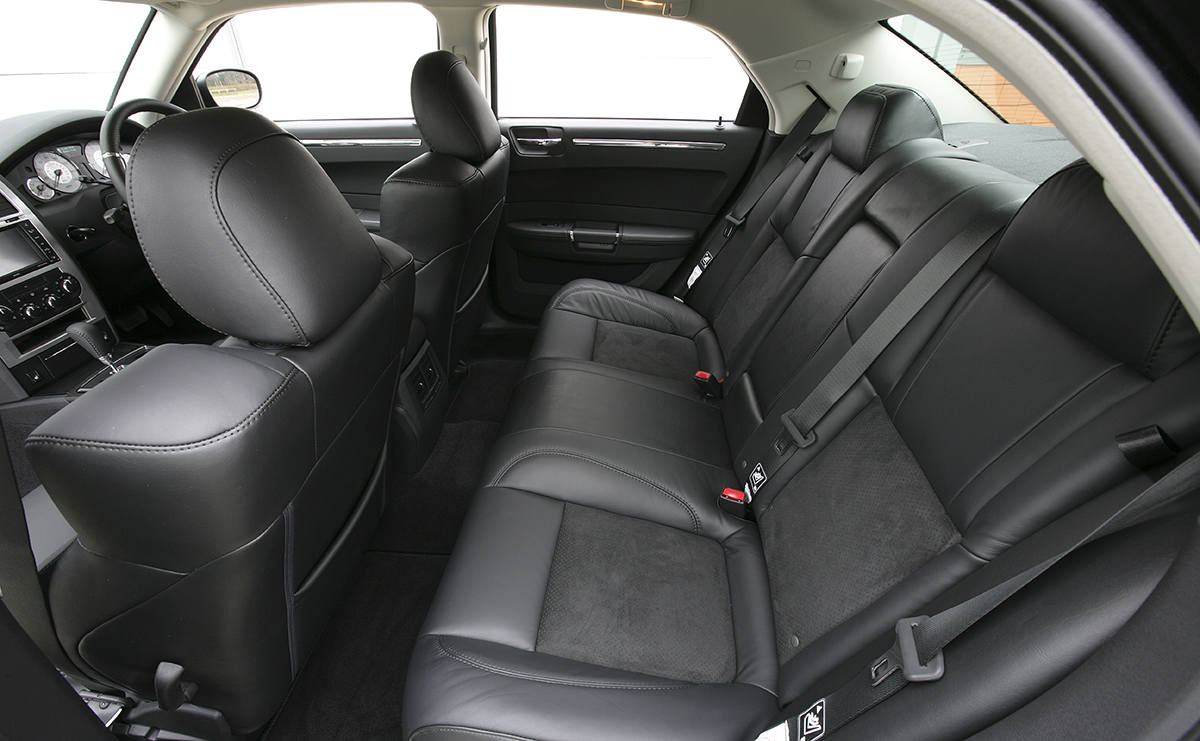
There was also something about sitting in the back of a 300C, with that high waistline creating a sense of privacy and its soft suspension absorbing the imperfections in the road, that made it particularly well suited to chauffeuring. The rear seats were never loaded with tech or anything, but it was enough for most.
Meanwhile, across the Atlantic…
Around this time, I was travelling regularly to the United States to attend chauffeur and limousine industry exhibitions, and it was fascinating to see how the American market had embraced the 300C.
Of course, our American counterparts weren’t particularly interested in diesel engines. They preferred the 5.7-litre HEMI V8 and the subsequent 6.1-litre SRT8.
By around 2006, the Americans were doing what they did best – chopping the cars in half and turning them into stretched limousines.
They certainly weren’t wrong about the 300C’s suitability for such a conversion. Its proportions, imposing front end and distinctive styling lent themselves remarkably well to being stretched.
Before long, it seemed that virtually every major American limousine coachbuilder had its own interpretation of the Chrysler 300C, and the vehicles subsequently became a familiar sight within the British limousine industry.
One of the more interesting developments I remember seeing in America was a long-wheelbase conversion, offering around six inches of additional rear legroom, together with tables and other luxury features for rear-seat passengers.
It was a vehicle I would have loved to see introduced into the British chauffeur market, but unfortunately, it never became a mainstream offering over here.
I genuinely believe there was a missed opportunity there. A competitively priced, diesel-powered, long-wheelbase 300C could have been a particularly interesting proposition for British operators.
A new generation under Fiat
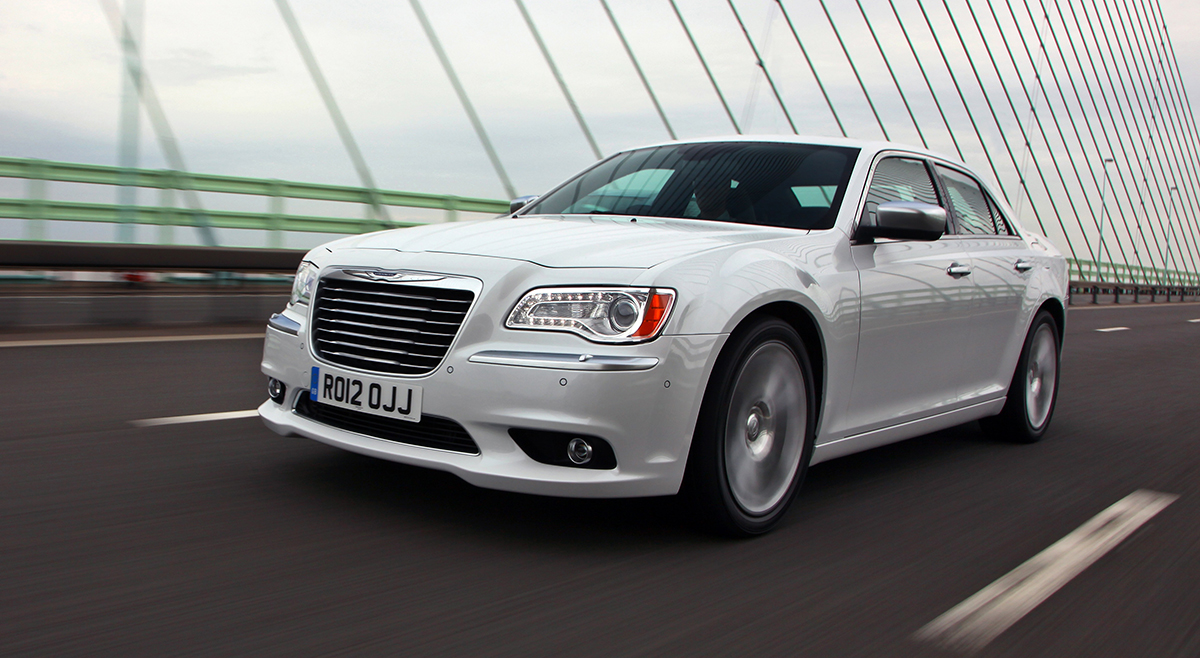
In 2011, the second-generation Chrysler 300C was unveiled, arriving in the UK the following year as the company entered a new chapter under Fiat’s growing ownership.
For many, this was a welcome development. The original 300C had established itself, but there was room for improvement, particularly when it came to interior quality.
The second-generation model brought a considerably more sophisticated cabin, improved materials, additional equipment and more modern technology, while retaining much of the distinctive appearance that had made the original such a success.
When it arrived in Britain in 2012, prices started at £35,995 on the road for the Limited model. Chrysler promoted the car as combining European-style quality and refinement with traditional American comfort and generous standard equipment.
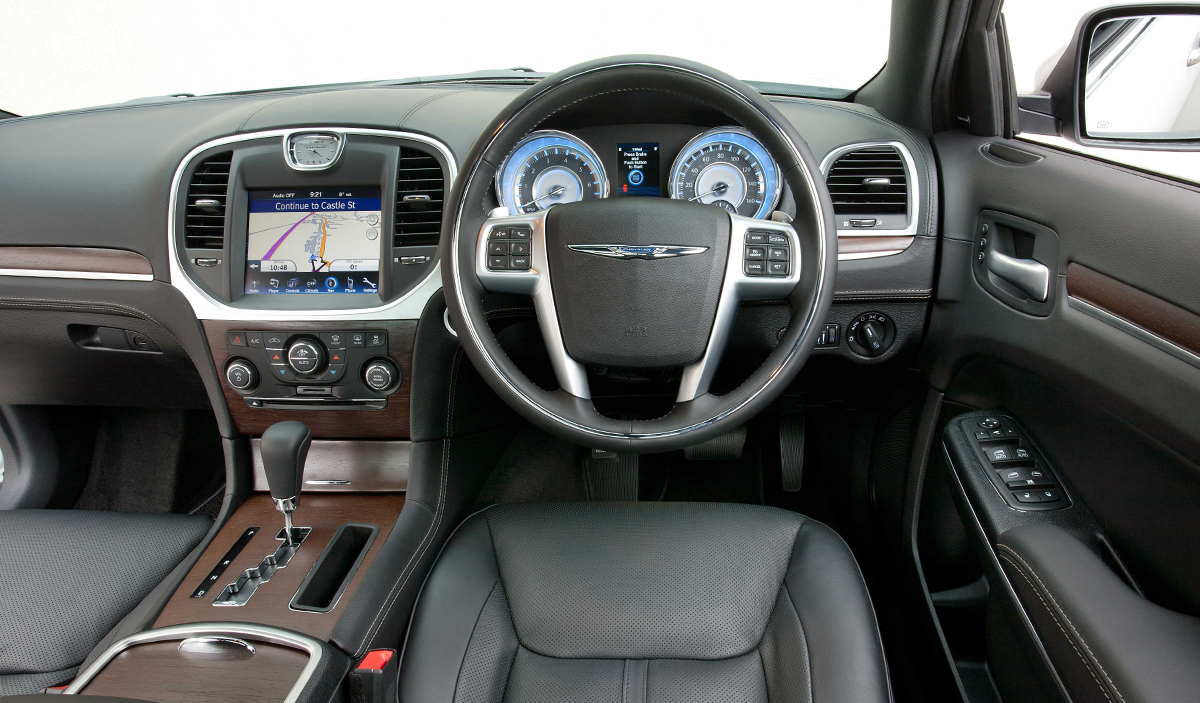
It was a considerable increase over the £25,750 price of the original diesel saloon in January 2006, although the specifications were not directly comparable. Nevertheless, the 300C remained an interesting alternative to the established executive marques.
However, looking back, I believe it was the first-generation model that ultimately stood the test of time better.
The move away from the Mercedes-sourced diesel engine to a new 3.0-litre unit brought its own long-term ownership challenges, and in my experience, the original cars have remained particularly desirable among enthusiasts.
Unfortunately, we never saw a third generation of the 300C in Britain. Although the model continued in other markets, production eventually came to an end in 2023, and another genuinely different executive saloon disappeared from the market.
From road tester to owner
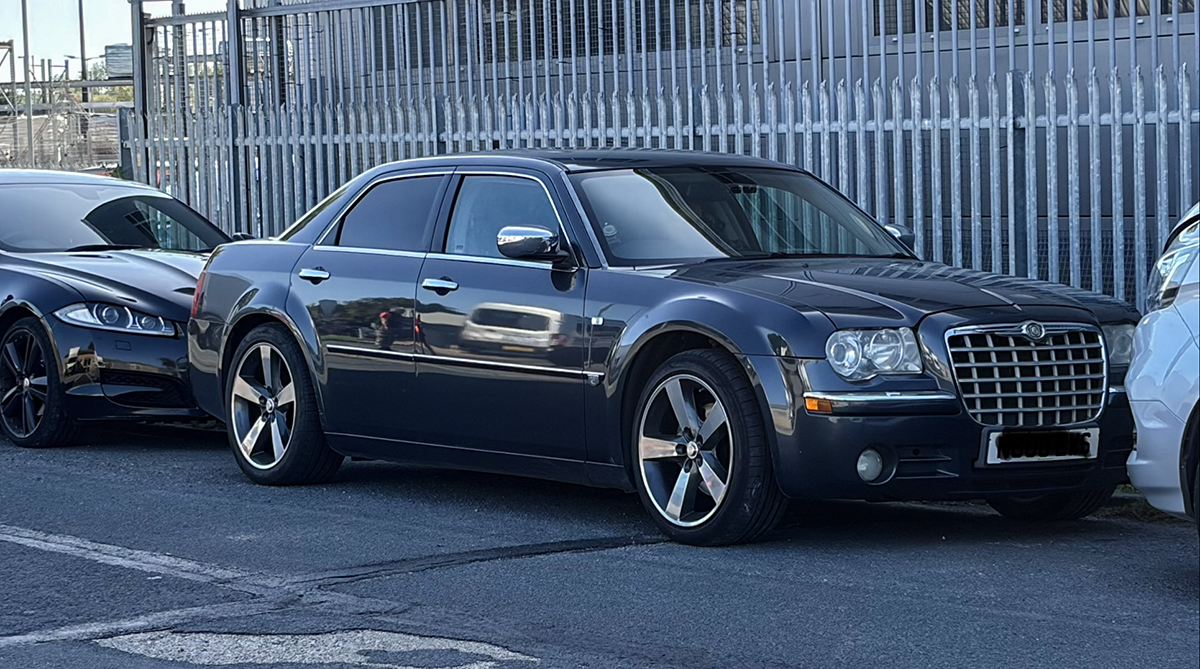
In 2023, almost two decades after my first encounter with the Chrysler 300C, I finally bought one of my own.
It was a 2007 model that was still being operated as a wedding car, another sector in which the 300C had found considerable success.
My particular example hadn’t been especially well looked after, so the past three years have involved a considerable amount of work.
A whole host of costly maintenance jobs have been carried out including a vital, all-important oil seal replacement by GWorks, I’ve fitted a black SRT interior and updated the appearance with a set of more modern 20-inch alloys.
She’s now exactly how I want her, and I still get much of the same enjoyment from driving the car as I did when I first took that silver, left-hand-drive example around the streets of Eastbourne in 2005. It’s smooth, punchy, economical and looks great.
What continues to surprise me, particularly as someone who regularly road tests brand-new luxury vehicles, is just how well the Chrysler holds its own in terms of ride quality.
That super-soft ride is still comparable to many modern executive cars, despite the technological advances we’ve seen over the past two decades. The automatic gearbox is still silky smooth, the V6 diesel has more than enough power, and even the Boston Acoustics sound system sounds excellent by today’s standards. My only upgrade is a new set of JBL speakers, just to keep up with technological advancements.
It comes from a generation of cars which, although equipped with plenty of electronics, didn’t have absolutely everything controlled by a computer. There are proper buttons, switches and dials, and you don’t need to navigate through several menus simply to adjust the temperature.
More importantly, it’s still a car that can be worked on. Mechanical components can be repaired or replaced, and with the right expertise, there’s no reason why these cars cannot continue to be enjoyed for many years.
Despite its age, the 300C still attracts attention. People regularly comment on how big and expensive it looks, often surprised to discover it’s nearly 20 years old and only worth a few grand! There aren’t many cars I can say that about.
Would the 300C still work today?
The Chrysler 300C was different. It had an identity of its own, and for a relatively short period, it gave the industry something genuinely interesting to consider.
It wasn’t perfect, but it didn’t pretend to be a Mercedes-Benz, BMW or Audi. It was unapologetically American, and that was a large part of its appeal.
There aren’t many examples still operating professionally today, other than the occasional wedding car, but I genuinely believe that had Chrysler continued to develop the 300C for the British market, with modern powertrains and technology, we would still see them being operated by chauffeurs and private hire operators.